As you start thinking about life after high school, college may feel like the only next step. Everyone talks about applications, essays, and deadlines, so it’s easy to assume you have to jump straight from graduation to campus. That path works for many students — but it’s not the only way forward.
Taking a moment to ask yourself, “Should I take a gap year?” can open up opportunities you might not even know exist. A gap year isn’t a pause on your education; it’s a chance to learn differently. You can try internships, serve your community, travel, or explore new interests while gaining independence and practical skills.
With Tivnu: Building Justice, you’ll spend nine months in beautiful Portland, Oregon, interning with local nonprofits and doing hands-on work that supports tiny house villages for people who’ve experienced homelessness, all while sharing daily life and exploring the Pacific Northwest with peers. You’ll take on real responsibilities and head to college more focused and excited about what comes next.
Why Tivnu Stands Out
Tivnu, founded in 2011 by Steve Eisenbach-Budner, is the only Jewish gap year program in America. That matters because students who want to combine Jewish values, hands-on service and social justice work, and community don’t have to piece together separate opportunities — Tivnu offers it all in one place.
Eisenbach-Budner explains, “Tivnu lets you connect the work of repairing the world with your own growth.” The program isn’t about stepping away from academics; it’s about learning through action, reflection, and community. Participants cook, discuss social issues, and celebrate Shabbat together, linking tradition to what’s happening in their neighborhoods.
For those unsure about delaying college, Eisenbach-Budner offers perspective: “When you’re 73, you’re not going to say, I wish I had worked 51 years instead of only 50.” Tivnu gives you the rare chance to pause and invest in who you’re becoming before launching into the next stage of school.
Benefits of a Gap Year for Young Adults
A gap year expands what education can look like. Eisenbach-Budner often tells families that learning doesn’t have to stay inside classrooms. “You have your whole life for a career,” he says, “but this is a unique moment to learn who you are and how you want to contribute.”
Elijah Freiman, who joined Tivnu in 2020–2021, described it as “the most transformative year of my life. I came in not knowing what my role was or what I wanted to change about the world, and I left with a path ahead of me.” His story shows how service projects, group living, and guided reflection give direction at a time when many teens feel pressure to have everything figured out.
Families appreciate that a gap year after high school can build maturity and focus. Rather than simply delaying college, students often return more motivated, with clearer goals and new skills that help them thrive even more academically and socially.
Want to see if Tivnu could be the right fit for you?
Jewish Gap Year Programs: Community, Learning, and Practice
Tivnu stands alone among Jewish gap year programs because it blends social justice work with Jewish life. Participants celebrate Shabbat, share meals, and study texts that connect enduring values with current events. Jewish learning isn’t an add-on; it’s woven into how students explore identity and help others within a community that welcomes the full spectrum of Jewish practice — from secular to modern Orthodox and everything in between.
Six outdoor adventures add extra depth. You’ll hike mountains, raft rivers, camp in forests, and even explore high-desert landscapes across the Pacific Northwest. These trips challenge you physically and give space to reflect on big questions about identity, history, and friendship.
Alum Talia Ehrenberg said Tivnu offered “internships, construction in tiny house villages, and communal living, along with adventures all over the Pacific Northwest.” For her, everything came together as “one really cohesive experience,” where Jewish tradition, community, and service supported each other.
Gap Year After High School: What to Expect with Tivnu
A gap year after high school should balance guidance with freedom. Eisenbach-Budner says, “Young people want to make an impact and they also need room to explore.” Tivnu structures that balance with clear expectations and space for curiosity.
During the nine-month program, you’ll intern with local nonprofits tackling issues like food insecurity, environmental justice, LGBTQ+ rights, and more. You’ll also have the opportunity to join construction crews that build and maintain tiny house villages for people transitioning out of homelessness — meaningful work that teaches cooperation, patience, and real-world problem-solving.
Daily life is part of the education too. Cooking meals with housemates, sharing chores, and discussing what you’re learning help you practice independence while staying connected to a supportive group.
Gap Year Before College: Building Skills for the Future
If you’re considering a gap year before college, think about how it can prepare you for the next stage. Eisenbach-Budner notes that living with others, taking on household responsibilities with roommates, and developing the habit of being on time for internships and activities build responsibility in ways high school rarely does.
Freiman shared, “Tivnu gave me direction. I came into the gap year not really knowing what my role was, what I wanted to change about the world, and I left with a path ahead of me.” His experience shows how internships, service, and city exploration can clarify goals before stepping onto campus.
Parents often see that students who invest in this year return with stronger focus, better study habits, and an appreciation for their education — qualities that help them make the most of college opportunities.
Volunteer Gap Year Opportunities That Make an Impact
In Tivnu’s volunteer gap year, you work with staff to shape your own internship and service experience. That might mean supporting tiny home villages for formerly unhoused people, assisting immigrant families, strengthening food-access programs across Portland, and more. Wherever you focus, you’ll be part of ongoing partnerships — not one-time tasks — so you can see real progress from your contributions.
Eisenbach-Budner explains, “When you spend a year helping ensure that people’s basic needs are met and supporting those pushed to the margins, you see the world differently.” That engagement becomes part of how you understand the world around you and your role in it.
Alumni often say that volunteering taught them to listen, collaborate, and notice needs around them — skills that carry into college, work, and everyday life.
Learn More from Tivnu Alumni
Curious how others made the most of their gap year? Check out 12 reasons to do a gap year written by Tivnu alumni. Their reflections show how internships, outdoor learning, and shared living can influence how you think about education, work, and community.
Reading alumni stories helps you picture yourself in their place — trying new things, meeting mentors, and gaining insights you can’t always find in school. Many describe coming back to college interviews and classes with stories that stand out and lessons that guide their decisions.
Seeing what graduates gained from the experience may help you decide how to make a gap year your own.
Discover the Benefits of a Gap Year Beyond the Classroom
Taking time between high school and college isn’t about stepping away from learning — it’s about choosing a different way to learn. A thoughtfully planned year lets you pause, explore, and discover what matters most before diving back into academics.
Eisenbach-Budner reminds students that moments like this don’t often come once work or other obligations begin. “This is your chance to focus on who you want to be and how you want to engage with the world,” he says.
Alumni such as Freiman and Ehrenberg show that friendships, service, and adventures with Tivnu stay with you long after the program ends, shaping how you approach challenges, opportunities, and community.
Ready to Explore Your Own Gap Year?
Wondering how a year like this could fit into your plans? Contact the Tivnu team. They’ll answer your questions, walk you through logistics, and show you how a gap year can support your goals after high school. You can also attend an upcoming info session to learn more.
Follow Us

Taking a gap year in the US can be as meaningful as doing one abroad.
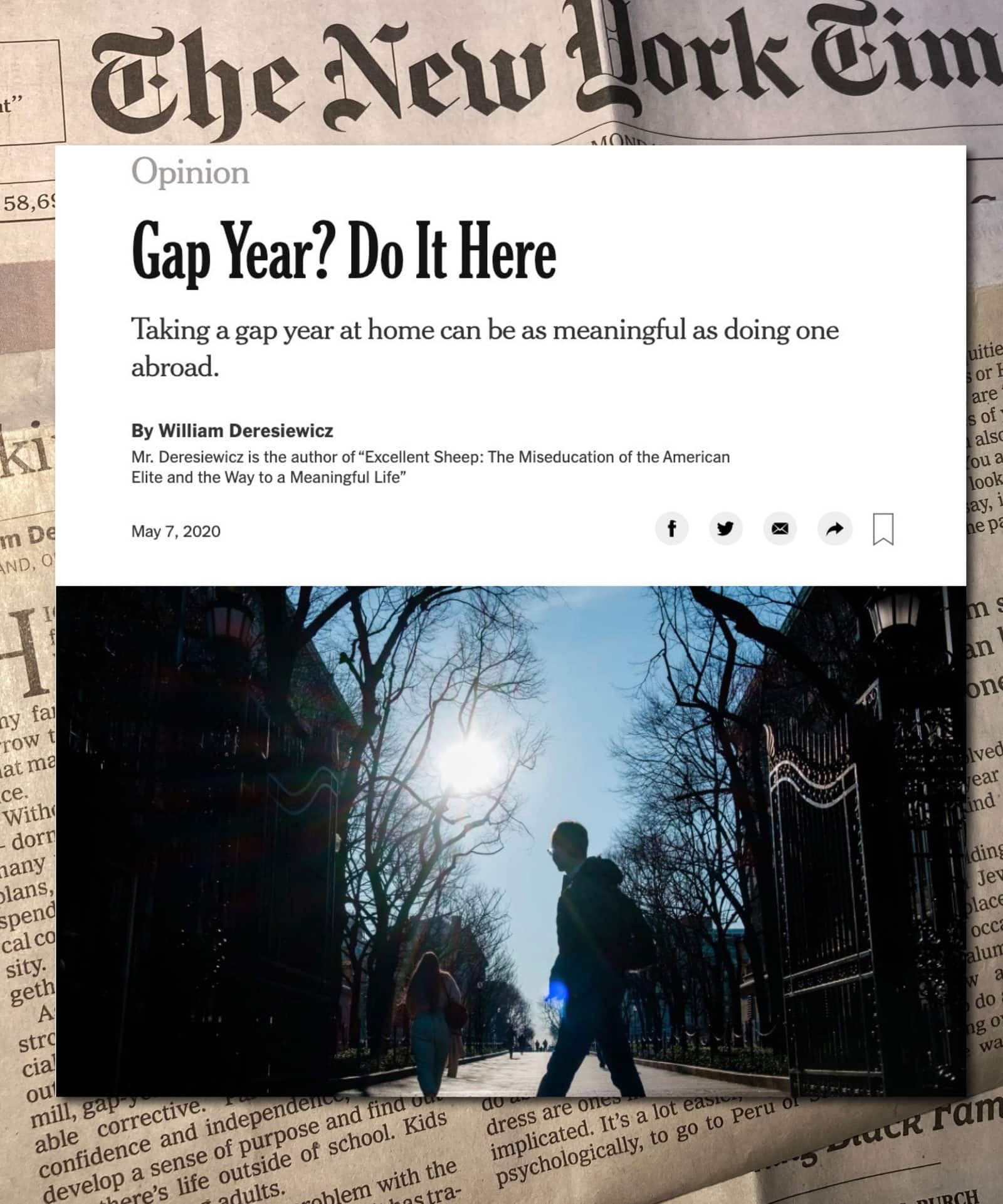 Featured in The New York Times